How to Get Started with KNX: A Comprehensive Guide for Beginners (For KNX Engineers)
March 27th, 2025
No Comments
Table of Contents
Introduction to KNX: Fundamentals of KNX in Smart Home and Building Automation
Introduction to KNX: The Basics of KNX in Smart Home and Building Automation KNX is a global standard in smart home and building automation and is indispensable for KNX engineers pursuing a career in this field. Basically, it is a communication protocol that enables products from different manufacturers to work together in a single system. In this way, lighting, heating, ventilation, security systems and more can be controlled from a single platform. Especially for those looking for flexibility and scalability in large-scale projects, KNX is the most suitable solution. Understanding the basics of KNX, grasping how the protocol works and choosing the right products are critical for a successful KNX project.
KNX Certification you can prove your competence in this field and take an important step in your career. The biggest advantage KNX offers is manufacturer independence. By combining KNX compatible products from different manufacturers, you can create the solution that best suits the needs of your project. This provides great flexibility in system design and offers cost advantages in the long run. Furthermore, KNX systems often have a distributed architecture without the need for a centralized control unit, which increases the reliability of the system. Even if one device in the system fails, other devices can continue to operate. This architecture is especially important for critical applications. Installation and programming of KNX systems is very important, as it requires specialized knowledge.
With these trainings, you will be able to professionally install, program and maintain KNX systems.
What is KNX? KNX Protocol, Advantages and Application Areas (Smart Homes, Building Management Systems)
What is KNX? KNX Protocol, Advantages and Application Areas (Smart Homes, Building Management Systems) KNX is a globally recognized communication protocol used in home and building automation. Its main purpose is to enable different devices and systems to communicate seamlessly with each other. This protocol can combine different applications such as lighting, heating, ventilation, security, energy management and many more into one integrated system. For example, an ABB KNX HVAC system can be synchronized with lighting and heating systems to improve energy efficiency and optimize comfort. The KNX protocol has a distributed architecture, meaning it is not dependent on a centralized controller.
Each device contains its own processor and memory and can communicate directly with other devices. This increases the reliability and flexibility of the system. The advantages of KNX include: manufacturer independence, scalability, flexibility, security and energy efficiency. The range of applications is wide: from smart homes to large commercial buildings, from industrial plants to public buildings. Furthermore, KNX systems can be easily integrated with building management systems (BMS), making building management more efficient. Understanding the principles of KNX [knx basic] and choosing the right products are crucial for a successful automation project. Through this address you can find more information about building automation.
The integration of DALI and KNX provides great advantages, especially in lighting control. Schneider DALI KNX solutions are ideal for energy saving and flexible lighting scenarios. From this address you can request an offer for customized solutions.
KNX Training: A Step-by-Step Guide to Become KNX Certified
KNX Training: A Step-by-Step Guide to Obtaining KNX Certification Obtaining KNX certification is an important step for KNX engineers in their professional development and this process basically proves your competence. The certification shows that you are competent in the design, installation and programming of KNX systems. The first step is to attend the ‘KNX Basic’ certification training at a training center approved by the KNX Association. This training covers the basics of KNX technology, system architecture and the use of ETS (Engineering Tool Software). During the training process, the working principles, topologies, communication protocols and system components of KNX are explained in detail. Theoretical knowledge is reinforced with applied laboratory studies. At the end of the training, you must be successful in the exam to receive the KNX certificate.
To be successful in the exam, it is important that you carefully follow the information provided throughout the training and are able to use the ETS software effectively. This certificate allows you to specialize in areas such as ABB KNX HVAC systems and Schneider DALI KNX integration.
How to Prepare for the KNX Certification Exam? Advice, Resources and Success Strategies (ETS Software, KNX Partner Program)
How to Prepare for the KNX Certification Exam? Advice, Resources and Success Strategies (ETS Software, KNX Partner Program) As you prepare for the KNX certification exam, your mastery of the ETS software is critical to your success. Practice using the ETS software extensively during and after the training. Working on different projects will help you understand all the features and functions of the software. You can also make use of the resources provided as part of the KNX Partner Program, which may include additional information and case studies related to the exam topics. The exam measures your practical application skills as well as theoretical knowledge. Therefore, it is important that you practice with real KNX devices, rather than just reading books.
Regularly review the notes you have taken during your KNX training and identify and focus on your gaps. You can also communicate with other engineers in online forums and KNX communities to share your experiences and get tips on the exam. It is possible to achieve success by adopting the knx easy concept with a regular and planned study program. Finally, for a successful exam result, you can get an offer and start using KNX systems in your current projects.
KNX Basic Information: Structure and Working Principle of the KNX System
KNX Basics: Structure and Operating Principle of the KNX System The basic operating principle of the KNX system is based on the concept of distributed intelligence: Instead of a centralized control unit, each device contains its own processor and memory. This makes the system more flexible, reliable and scalable. Each KNX device communicates with other devices via a bus, so that different functions such as lighting, heating, security systems can work integrated with each other. This decentralized structure prevents the system from completely collapsing in the event of a failure of one device; other devices continue to operate normally. In this context, the most important feature of the KNX knx basic approach is that the devices communicate intelligently among themselves instead of managing the entire system from a single point.
This is what makes the KNX knx easy. At the heart of the system is a communication line called a bus. Sensors (e.g. motion detectors, thermostats) send messages to this line and actuators (e.g. light switches, valve controllers) receive these messages and act accordingly. Each message can be addressed to a specific group or device. This grouping allows the system to easily manage complex scenarios. A scenario is a predefined sequence of commands that enables multiple devices to operate simultaneously in a specific way. For example, a “leave home” scenario could turn off all the lights, turn down the heating and activate the security system.
KNX Devices and Components: Sensors, Actuators, Control Units and Communication Interfaces (TP, IP, RF)
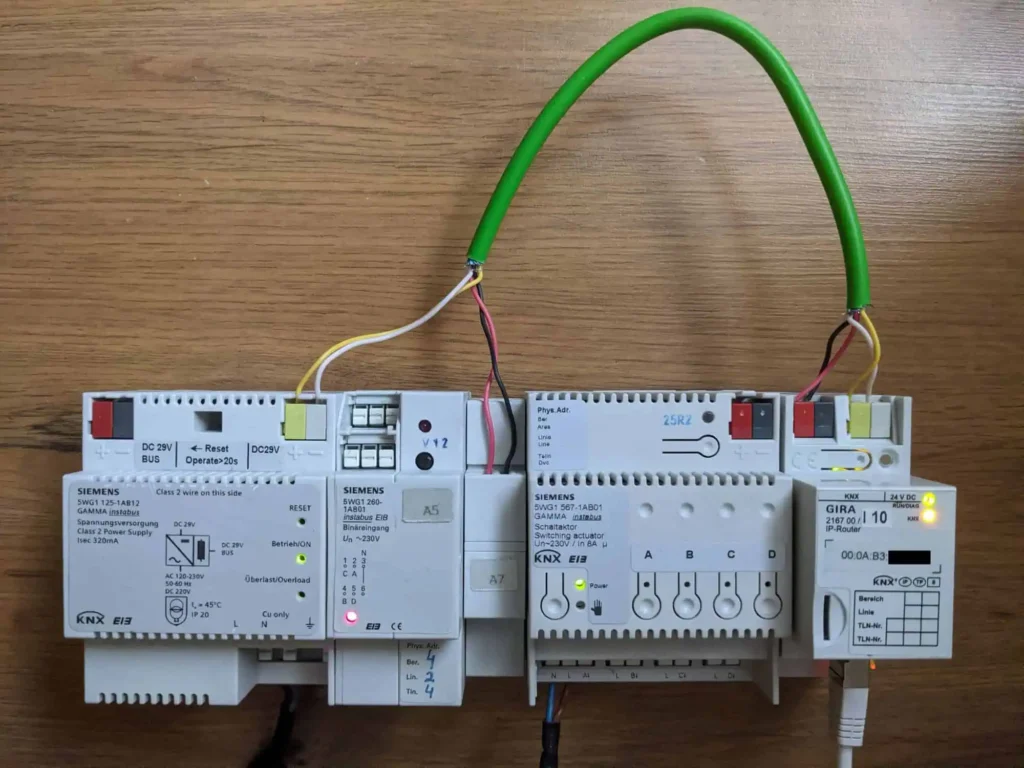
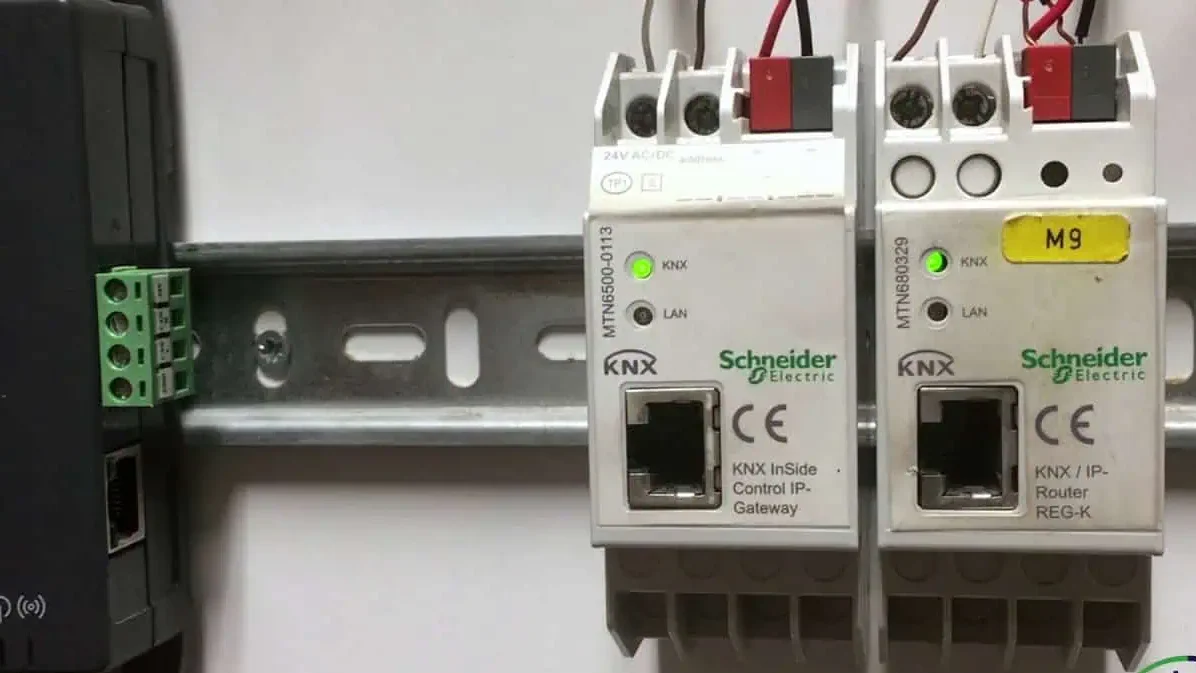
KNX Devices and Components: Sensors, Actuators, Control Units and Communication Interfaces (TP, IP, RF) The devices and components that make up the KNX system are sensors, actuators, control units and communication interfaces. Sensors detect changes in the physical environment (e.g. temperature, light level, movement) and send this information to the KNX bus. Actuators act on commands from sensors to control lighting, adjust heating or open and close blinds. Control units manage more complex functions, for example, timers, logic gates and scenario management. Communication interfaces provide connectivity between different KNX communication media. The most commonly used interfaces are TP (Twisted Pair), IP (Internet Protocol) and RF (Radio Frequency).
TP is used for wired communication within the building, while IP connects the KNX system to the internet and allows remote access. RF is used for wireless communication and is ideal where wiring is difficult. While ABB ABB KNX HVAC systems usually communicate via TP, IP or RF solutions are also available for more flexible installations. you can learn the detailed configuration of these devices. In special applications, such as Schneider DALI KNX integration, specific interfaces and protocols come into play. From this address You can get information about our KNX Certification programs and apply for knx training.
Easy Automation with KNX: ABB KNX HVAC and Schneider DALI KNX Integration
Easy Automation with KNX: ABB KNX HVAC and Schneider DALI KNX Integration In your KNX automation projects, you can increase energy efficiency and optimize building comfort thanks to ABB KNX HVAC and Schneider DALI KNX integrations. These integrations enable different systems to be controlled from a single platform, reducing complexity and streamlining installation processes. This reduces the learning curve, especially for engineers at knx basic level. ABB KNX HVAC integration allows centralized management of heating, cooling and ventilation systems. Thus, the temperature and humidity values inside the building can be continuously monitored and kept at the desired levels.
Schneider DALI KNX integration incorporates the control of lighting systems into the KNX network. In this way, lighting levels can be adjusted automatically to save energy and lighting can be switched on and off when motion is detected within the building. Both integrations are designed to meet the need for knx training. Correct configuration and programming are important for these integrations. ABB and Schneider's products integrated into ETS applications work seamlessly in KNX projects. This makes knx easy installation and configuration possible.
ABB KNX HVAC Control: Integration of Heating, Cooling and Ventilation Systems with KNX (Energy Efficiency, Building Comfort)
ABB KNX HVAC Control: Integration of Heating, Cooling and Ventilation Systems with KNX (Energy Efficiency, Building Comfort) ABB KNX HVAC integration significantly increases energy efficiency and enhances building comfort by connecting heating, cooling and ventilation (HVAC) systems to the KNX network. With this integration, room temperatures and ventilation settings can be centrally controlled, energy consumption can be optimized and the individual comfort needs of users can be met. To ensure energy efficiency, ABB KNX HVAC systems automatically adjust heating and cooling systems, taking into account occupancy in rooms and outside weather conditions.
For example, if a room is empty, the heating or cooling is automatically switched off or set to a low level. Furthermore, thanks to window sensors, heating or cooling systems are automatically switched off when windows are opened, preventing energy waste. KNX Certification trainings also focus on such scenarios. To increase building comfort, the temperature settings of each room can be individually set and adjusted according to users' preferences. ABB KNX HVAC systems enable different temperature settings at different times of the day thanks to timers and scenario-based controls. In addition, humidity sensors automatically control ventilation systems to improve indoor air quality.
Knx training teaches the programming and configuration of these systems in detail.
Getting Started with KNX Projects: Practical Tips and Resources for KNX Engineers
Getting Started with KNX Projects: Practical Tips and Resources for KNX Engineers For a successful KNX project, first and foremost a systematic approach and access to the right resources are essential. Remember, even knx easy installations require careful planning. The key tip is to clearly define the scope of your project, select the right devices and make a detailed system configuration. To get off to a good start, attending certified KNX training programs will help you master current industry standards and best practices. For your first projects, starting with smaller and more manageable scale projects will help you to better understand the structure and operating principles of the KNX system.
Mentoring from experienced KNX engineers can help you overcome problems and find more efficient solutions. Regularly utilizing resources such as online forums, white papers and manufacturer websites will also help you keep your knowledge up to date. For example, if you want to specialize in ABB KNX HVAC systems, it's worth checking out ABB's own training materials and application notes. Alternatively, there are courses specifically designed for knx training engineers. Using project management tools makes it easier for you to keep track of processes and manage resources effectively, especially on large projects.
Furthermore, when putting your KNX basic knowledge into practice, you can analyze the behavior of the system in advance by using software that simulates different scenarios. This allows you to identify potential problems at an early stage and develop solutions.
KNX Project Planning and Design: Needs Analysis, Device Selection and System Configuration (KNX Bus Topology, Application Scenarios)
KNX Project Planning and Design: Needs Analysis, Device Selection and System Configuration (KNX Bus Topology, Application Scenarios) The most important step in KNX project planning and design is a detailed needs analysis. Without a thorough understanding of the customer's expectations and requirements, it is not possible to make the right device selection and system configuration. For this reason, you should conduct a comprehensive interview with the customer at the beginning of the project and determine their lighting, heating, ventilation, security and other automation needs in detail. At this stage, you should also consider application scenarios and plan how the system should behave in different situations. Once the needs analysis is complete, the selection of the right devices comes next.
In this choice, it is important to pay attention to whether the devices have KNX certification, their technical specifications, compatibility and cost. For example, if you are going to use a Schneider DALI KNX gateway, you should make sure that it is compatible with luminaires that support the DALI protocol. The KNX bus topology should be determined by the size and complexity of the project. In small projects, a tree topology may be sufficient, while in larger projects a backbone topology may be more appropriate. Remember, choosing the right topology directly affects the reliability and performance of the system. System configuration is done using ETS software. At this stage, the parameters and group addresses of each device must be set correctly. Group addresses enable communication between devices and are critical for the correct operation of the system.
During configuration, it is important to be careful and take regular backups to avoid possible errors. Also, mastering the principles of building automation makes the system more efficient and user-friendly.
For KNX engineers, ‘How to Get Started with KNX: A Beginner's Guide’ offers practical benefits and how can an engineer with basic knowledge of KNX make the most of it?
‘How to Get Started with KNX: A Beginner's Guide’ offers KNX engineers the opportunity to solidify the foundations of the system and expand their existing knowledge with current technology and applications. Filled with detailed installation examples, configuration tips and solutions to common problems, an engineer with a basic knowledge of KNX can consolidate their hands-on knowledge and play a more active role in their projects. In addition, the industry standards and best practices included in the guide help projects to be completed more reliably and efficiently. This both improves project quality and contributes to the engineer's professional development. This guide is an important resource for engineers wishing to specialize in KNX. The content and structure of the manual facilitates the engineers' learning process and provides a better understanding of KNX systems. In this way, KNX engineers can be more successful in their projects and better serve their customers.
As a KNX engineer experienced in ABB KNX HVAC and Schneider DALI KNX integration, what specific advantages does this guide provide me and how will it help me improve my area of expertise?
‘How to Get Started with KNX: A Beginner's Guide’ helps an experienced KNX engineer with systems such as the ABB KNX HVAC and Schneider DALI KNX to expand his or her expertise by providing integration details between KNX products from different manufacturers, advanced configuration techniques and solutions to potential compatibility issues. In particular, it provides new perspectives on data exchange between different protocols, energy efficiency optimizations and system security. In addition, the case studies and current trends in the guide increase the engineer's competitiveness in the industry and enable them to take the lead on more complex projects. By helping an experienced engineer to keep their knowledge up to date and keep abreast of the latest developments in KNX systems, the guide contributes to advancing their professional career.
Introduction Are you a systems integrator looking for a powerful and versatile solution to transform building management? Look no further than the EcoStruxure™ Building SmartX AS-P Server. This cutting-edge technology from Schneider Electric...
A New Era in Building Automation with Schneider KNX Schneider KNX systems take energy efficiency and control to the next level in modern buildings. Designed for integrators and engineers, these solutions are ideal for complex projects.
If you are a system integrator looking for a robust solution to transform building management, Schneider Electric's EcoStruxure™ Building SmartX AS-P Server is an ideal option for you. This advanced BMS controller is ideal for commercial and industrial buildings.
KNX technology gives you the power to create smart and automated homes. But what happens when you want to give homeowners remote access or control capabilities while they are away? This guide explains how KNX...
Are you looking for a reliable and intuitive way to automate your home or business? KNX touch panels are for you! With a wide range of products available on the market, you are sure to find the touch panel that best suits your needs.
Smart Home Products Creating the connected home of your dreams has never been easier. Discover the Schneider Electric and ABB KNX smart home system, a one-stop solution for truly smart homes. Renovation and...
In the era of smart homes and sustainable living, KNX systems are emerging as the leading solution for efficient and intelligent control of buildings. As a comprehensive and standardized platform, KNX offers a comprehensive range of solutions that optimize energy...
Introduction Smart homes are becoming increasingly popular as people look for ways to simplify their lives and improve the energy efficiency of their homes. KNX devices are a part of this trend, offering a versatile and flexible solution for building automation.
Understanding Building Automation Systems The MTN6725-0004 KNX-DALI Gateway serves as a critical bridge in modern building automation. So, why are building automation systems so important? The main purpose of these systems is to provide energy efficiency,...
Smart Building Management The world is changing rapidly and we have to keep up with this change. Factors such as climate change, technological advances and globalization are affecting the way we work and live. We are now more...
Centralized Management of Building Automation with Enterprise Server Enterprise Server EcoStruxure Building Operation offers centralized management of building automation. For engineers and system integrators, this solution provides control logic, trend recording and...
As the demand for smart homes and building automation systems continues to grow, so does the need for intuitive and easy-to-use controllers. In this blog post, KNX explains the essential features of building automation systems...
The Middle East's hot climate, high humidity and dusty conditions require a special approach when choosing building automation and home automation systems. Dubai, Sharjah, Riyadh, Al Huber, Jeddah, Egypt, KSA and...
KNX lighting control systems are a powerful solution for engineers, integrators and contractors to optimize lighting management in building automation. The KNX lighting system stands out with flexible control and energy efficiency. Lighting
In recent years, the concept of “smart home systems” has gained significant traction in the Middle East, particularly in the United Arab Emirates and Saudi Arabia. As these countries continue to embrace technological advancements, homeowners and businesses...
HVAC Control with KNX In the field of smart homes and smart building control, KNX HVAC (Heating, Ventilation and Air Conditioning) control stands out as a game-changing technology. Schneider Electric and ABB...
Today, smart home technologies have become an indispensable part of our lives. Among these technologies, KNX stands out with its standardized protocol and wide ecosystem. In this article, we will take an in-depth look at KNX systems and analyze the most popular...
As the world becomes increasingly interconnected, the demand for smart homes and building automation systems continues to grow. KNX devices are an excellent choice for smart home and building automation systems and...
Introduction: In the rapidly evolving world of smart home technologies, KNX system integrators play an important role by bringing together different technologies and systems to create seamless and smart living spaces. In this paper,...
Estimated Reading Time: 8 minutes Energy efficiency: ABB 6138/11-84-500 saves energy in fan coil systems. Advanced control: Provides precise temperature control by managing valve actuators and fan speeds. Critical installation recommendations:...
Address: İçerenköy Mahallesi, Değirmenyolu Caddesi, Kutay Business Center, B Blok Ataşehir, Istanbul, Turkey
Teorem Enerji has established itself as a frontrunner in the smart home automation industry since its inception in 2010. As the first e-commerce company in Turkey and the Middle East and North Africa (MENA) region to focus on KNX products, we have consistently delivered innovative solutions that empower individuals and businesses to embrace the future of connected living.
Our mission is to transform commerce by seamlessly integrating technology into every aspect of our operations. To better serve our customers in the Middle East and North Africa, we are expanding our services to the following countries: UAE (Dubai, Abu Dhabi,) Saudi Arabia (Jeddah, Riyadh, Al Khobar), Egypt, Qatar, Oman, Jordan, Azerbaijan, Georgia and Europe.
By offering tailored smart home automation solutions in these regions, we aim to enhance living environments and empower our customers to embrace the connected future. Our commitment to innovation and customer satisfaction remains at the core of our business as we continue to grow and evolve.




 TR
TR  EN
EN  AR
AR