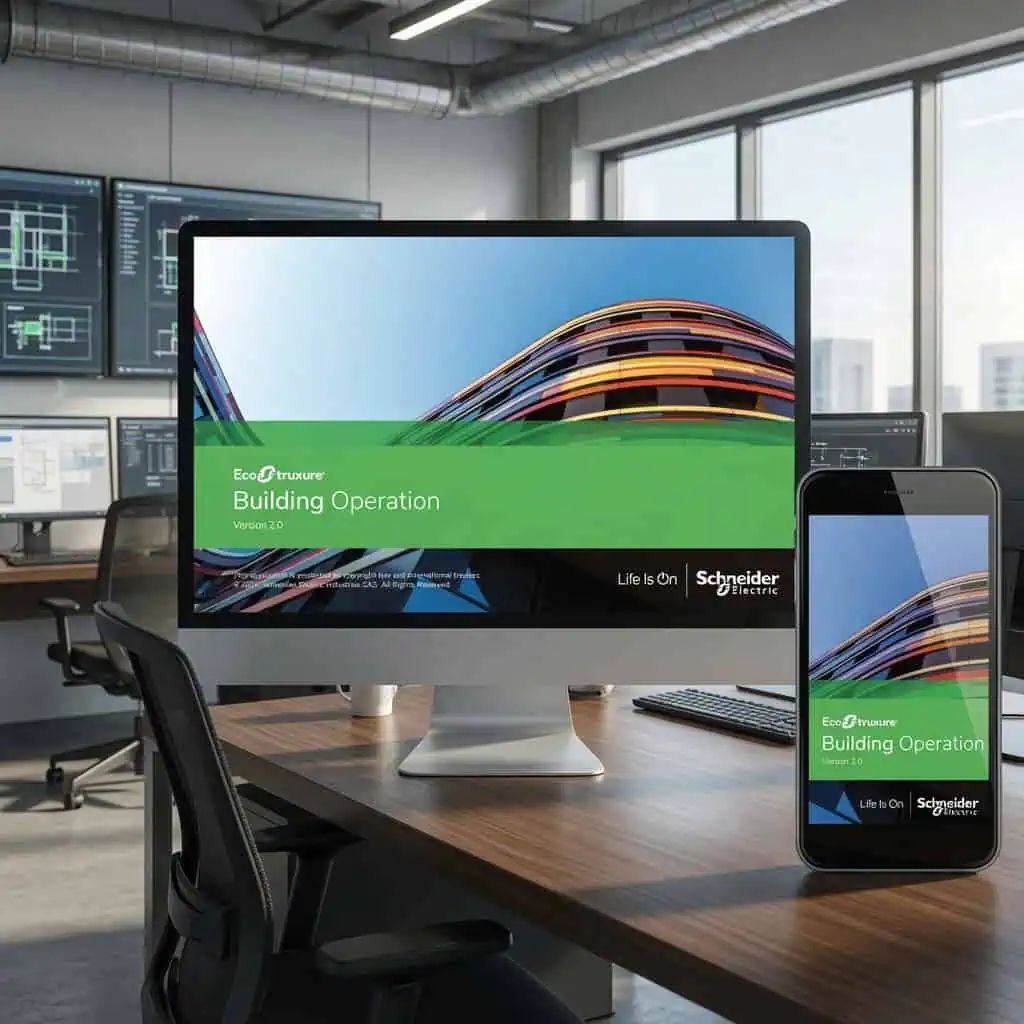
1. Introduction: Solutions to the Complexities of Modern Building Management
In today's real estate and facility management world, "data" has become both the greatest asset and the greatest challenge. Modern buildings are massive organisms generating thousands of data points, from HVAC systems and lighting to security and energy meters. However, when this data remains in silos, it becomes an operational burden rather than a source of meaningful insight for business owners and facility managers. As a digital transformation strategist, the most fundamental problem I've observed is the inefficiency created by this data clutter and the resulting high operating costs.
Today, building future-ready buildings is not a luxury or a visionary choice, but a commercial necessity. In an era of tightening energy regulations, carbon footprint tracking, and employee experience determining a company's competitiveness, buildings need to be agile enough to respond to these expectations. Schneider Electric's EcoStruxure Building Operation (EBO) platform is designed to manage precisely this complexity and transform buildings from passive concrete masses into value-generating digital assets. The underlying motto of the system, "Increase building value, unleash productivity," is not just a marketing slogan; it is a summary of the roadmap to operational excellence.
2. EBO as an Open and Collaborative IoT Platform
Unlike traditional building management systems (BMS), EcoStruxure Building Operation is not a closed-loop software; it is an “Open Innovation Platform” that connects hardware, software, and services over a high-speed Ethernet IP backbone. This architecture represents the point where the IT (Information Technology) and OT (Operational Technology) worlds truly converge.
EBO's greatest strength lies in its ability to seamlessly integrate systems with a heterogeneous structure. Precise control of HVAC systems, lighting automation that optimizes energy density, and fire and safety systems that ensure facility security all converge in the same database. This not only facilitates monitoring but also allows for the management of inter-system scenarios (e.g., lighting switching to evacuation mode and ventilation initiating smoke extraction during a fire alarm) from a single central point. The source text expresses this vision as follows:
“EcoStruxure Building is an Open Innovation Platform for Buildings, featuring scalable, safe, and global architecture to create future-ready smart buildings.”
This platform extends IoT (Internet of Things) capabilities to the furthest reaches of the building, transforming data from devices into actionable insights.
3. Massive Scalability: Manage Thousands of Servers from a Single Point
For large-scale projects and global real estate portfolios, scalability is the element that defines the system's "breaking point." Thanks to its hierarchical structure, EBO architecture can adapt to anything from the smallest office building to massive campus complexes. At the top of this hierarchy... Enterprise Central, It acts as the "brain" of the system.
The technical data proves why EBO is the market leader:
- Enterprise Central: This central controller, 50 Enterprise Servers‘It can provide integration up to [number] kilometers. This means that different locations spread over thousands of kilometers can be managed from a single interface.
- Edge Control Capabilities: In total across the system 2,500 servers Scalability is possible up to (SpaceLogic AS-B and Edge Server).
This massive capacity offers critical advantages for multisite management organizations, such as standardized security policies, centralized alarm management, and consolidated energy reporting. From a strategist's perspective, this translates to reduced Total Cost of Ownership (TCO) and maximized operational efficiency.
4. Personalized User Experience: The Difference Between WorkStation and WebStation
EBO argues that a modern interface should not only be “beautiful” but also “functional” and “customizable.” User preferences follow them regardless of the device they log in from. However, the system offers two main interfaces: WorkStation Pro and WebStation, It focuses on different user profiles.
For engineering teams and fully authorized operators, WorkStation Pro offers access to the full depth of the system, while WebStation provides device-independent freedom for facility managers and mobile teams. The following comparison table, based on the Functionality Matrix in the resources, clearly demonstrates the capabilities of these two interfaces:
| Functionality | WorkStation Pro | WebStation |
| Dashboard Display | Yes | Yes |
| Creating and Editing Personal Dashboards | No. | Yes |
| Creating a Public Dashboard | Yes | Yes |
| Graphic Display | Yes | Yes |
| Graphic Creation and Editing (TGML) | Yes | No. |
| Alarm Management and Filtering | Yes | Yes |
| Detailed Programming (Script/Function Block) | Yes | No. |
| BACnet Device Discovery and Management | Yes | No. |
| LonWorks Device Management (NVs/CPs) | Yes | Yes |
| SAML 2.0 Authentication | No. | Yes |
| Kiosk Mode Support | No. | Yes |
| Exporting Multiple Trend Log Lists | Yes (XML/CSV/XLSX) | Yes (XML/XLSX) |
| User/Group Authorization Management | Yes | No. |
The strategic distinction here is that WorkStation Pro is an indispensable engineering tool for the “construction and maintenance” phase of a building. WebStation, on the other hand, maximizes operational comfort during the “operation” phase, with access from anywhere and rapid response capabilities. WebStation’s dashboard customization capability allows a facility manager to design screens where they can track their own KPIs (key performance indicators) without needing a technical team.
5. Revolution in Software and Licensing: The Three-Tier Model (Version 7.0)
The most radical change in EBO v7.0 is the simplification of the licensing model. Previously, separate licensing engineering was required for each server and feature, but now a centralized model is used. This applies to the top-tier server. one-time activation, This, by being inherited throughout the entire hierarchy, results in enormous savings in engineering time.
EBO v7.0 offers three different tiers to meet the needs of businesses:
- Essential: It efficiently meets the basic needs of standard buildings, such as HVAC, lighting, and alarm management.
- Advanced: In addition to the essential tier, it also includes counter management (Sustainability Pack), external log storage solutions such as MSSQL/Timescale, and features critical for integration with the IT world. SAML 2.0 (Single Sign-On) It includes authentication features. For IT departments, SAML 2.0 support is a major reason for choosing it for the centralized management of cybersecurity protocols.
- Advanced Plus: This is for facilities with the highest level of regulation. AVEVA Pi With features such as integration, change control, and digital signing (PDF signing), it caters to sectors where data integrity is a legal requirement.
Smart Connector Extensions: Industrial Case Scenarios
EBO's vision of "openness,", Smart Connector It comes to life with extensions. These extensions allow third-party systems to connect to EBO as if they were "native" users. Here are some scenarios that create value in the B2B world:
- ROI (Route of Use) for Hospitality: Hilton OnQ, Oracle Opera or GuestCentrix Thanks to its extensions, the hotel reservation system communicates directly with the BMS. When a guest checks in, the room's climate control and lighting automatically switch to "comfort" mode; upon check-out, the system switches back to "economy" mode, directly saving on energy costs.
- Cybersecurity and Monitoring: IndigoVision The extension enables CCTV incidents to be monitored via EBO, increasing situational awareness for security teams.
- Sustainability and Mobility: EVlink EVCE With this extension, building management also includes electric vehicle charging stations. Charging speeds can be dynamically adjusted according to the building's current total load (load shedding).
- Communication and Services: Teltonika SMS Alarms The extension ensures that critical alarms in offline or remote locations are instantly transmitted to field teams via SMS.
- Data Analytics: MS SQL Server This extension allows building data to be transferred to enterprise databases, opening the door to analysis with business intelligence (BI) tools.
6. Hardware Power: SpaceLogic Server and I/O Modules
EBO's software genius is supported by powerful hardware at the edge control level. The SpaceLogic server family dramatically improves network performance by bringing IP-based communication down to the field level.
Especially the new generation SpaceLogic AS-P-3, It sets the bar with its hardware specifications:
- Processor: 2 GHz ARM Cortex-A72 dual-core processor (Much faster data processing than previous generations).
- Memory 2 GB RAM and 32 GB eMMC (massive logging and graphics storage capacity on the device).
- Connection: Redundant networking with one 1GB and two 100MB Ethernet ports; USB 3.0 Type-C support.
Strategic Security and Compliance: For B2B decision-makers, hardware selection isn't just about speed. AS-PS (Secure Boot) These models offer hardware-level protection against cyberattacks by ensuring the device can only be opened with authorized software. They are also ideal for projects where life safety is critical. UL-864 (SMK) Certified models provide the legal and technical means to manage vital functions such as smoke control via the BMS.
SpaceLogic servers offer flexibility even in the most complex machine rooms, with expansion capabilities up to 29 modules and 464 I/O points. Dual Ethernet ports allow for the preservation of existing BACnet field bus devices, while the management layer can be upgraded to IP speeds, enabling system modernization.
7. Verimlilik Statistiği: Mühendislik ve Devreye Almada %30 Tasarruf
EcoStruxure Building Operation is not just an end-user product, but also a productivity machine for system integrators (EcoXpert). The speed at which a project is implemented directly impacts the return on investment (ROI). The tools offered by EBO deliver the following tangible successes:
- Mühendislik Verimliliğinde %30 Artış: Standard libraries, mass change tools, and advanced editors reduce engineering time.
- %20 Daha Hızlı Devreye Alma: IP-based infrastructure and mobile deployment applications minimize installation errors.
- 10 Times More Scalable: Being able to manage many more devices and sites from a single center reduces the burden on operational teams.
Developed for critical facilities (Pharmaceuticals, Food, Life Sciences) Regulated-industries Compliance Pack, This combines efficiency with legal protection. FDA 21 CFR Part 11 The system, which operates within the framework of compliance and ALCOA (Attributability, Readability, Concurrency, Authenticity, and Accuracy) principles, offers electronic signatures and indelible audit trails. This transforms digital transformation in highly regulated sectors from a “risky” process to a “safe and auditable” one.
8. Conclusion: Building the Future Today
EcoStruxure Building Operation (EBO) is much more than just building management software; it's a strategic management platform for modern businesses. It offers cost control through centralized licensing, growth flexibility through massive scalability, and full integration with third-party systems through open innovation capabilities.
As a modern facility manager or business owner, you have two options: either reactively try to solve problems within the existing data chaos, or transform your building into an instrument that serves your business goals with a platform like EBO.
To begin your transformation journey and unlock the true potential of your facility, contact Schneider Electric experts and our certified EcoXpert partners. Remember, the buildings of the future are being built today.
Our closing question serves as a compass for all decision-makers: “Is your building simply a structure that provides shelter, or is it a digital asset that actively increases the efficiency of your business?”